








Affiliate disclosure: This article contains affiliate links. If you click and purchase, we may earn a commission at no extra cost to you.
Table of Contents
◉What Network Solutions Website Builder is (and why it fits small teams) ◉Definitions you’ll see in this guide ◉Before you build: get your “inputs” ready (so the AI and templates work better) ◉Step-by-step: build, publish, and optimize your site ◉One table: a launch checklist that keeps you focused ◉Pros, cons, and risk management (what to watch before you commit) ◉Mini case study: a local service business launching in one weekend ◉Common mistakes (and expert fixes) ◉FAQ ◉Conclusion: go live now, then improve in weekly cycles
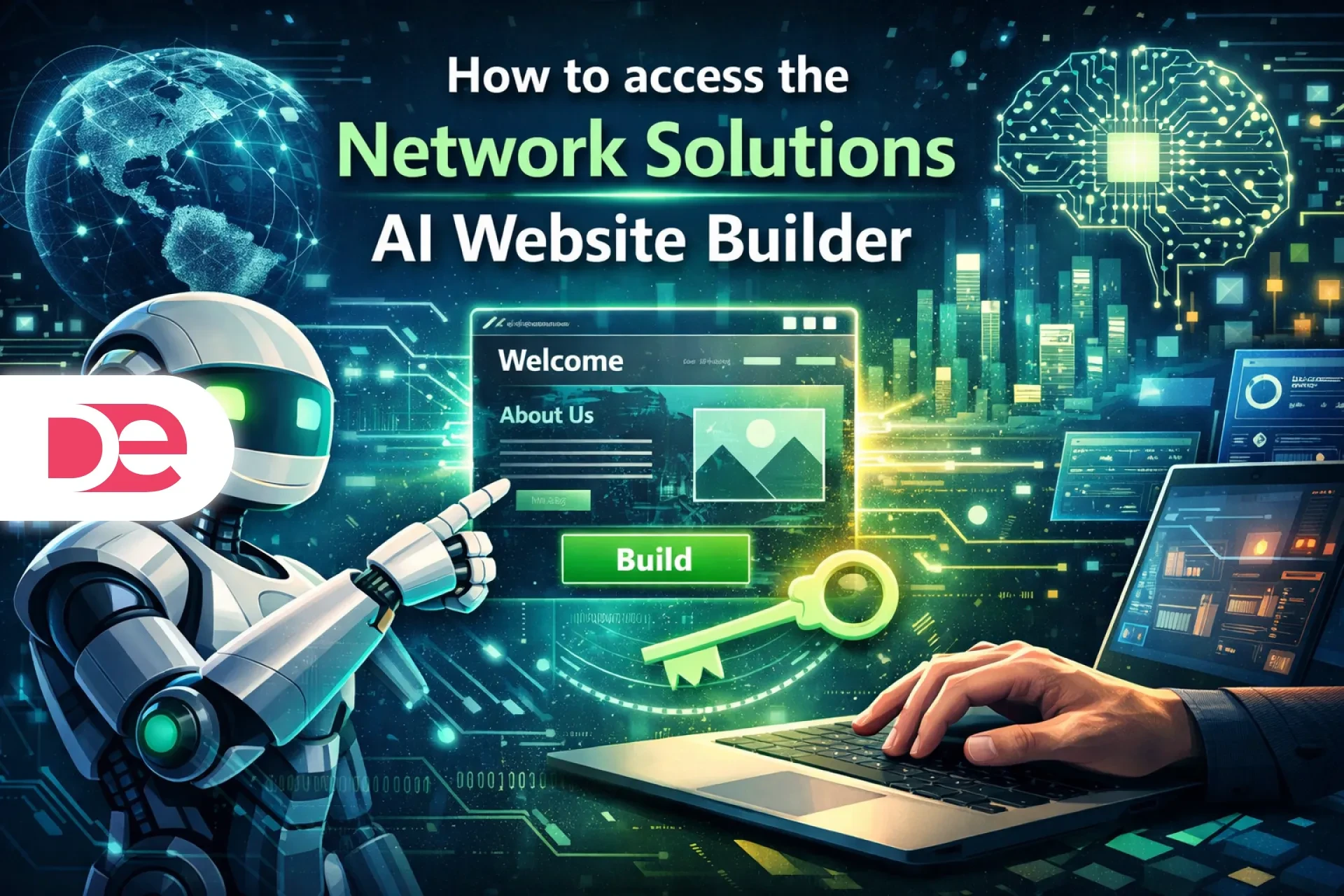
The good news: you don’t need a developer to publish a site that looks legit, loads quickly, and supports real business goals. Tools like Network Solutions Website Builder combine an AI-assisted setup with a drag-and-drop editor, built-in hosting, SEO controls, and optional eCommerce—so you can launch faster while keeping day-to-day updates in your own hands.
The good news: you don’t need a developer to publish a site that looks legit, loads quickly, and supports real business goals. Tools like Network Solutions Website Builder combine an AI-assisted setup with a drag-and-drop editor, built-in hosting, SEO controls, and optional eCommerce—so you can launch faster while keeping day-to-day updates in your own hands.
This tutorial walks you through a practical, U.S.-focused setup—from choosing the right build path to publishing, optimizing for search, and managing risk—so you can go live confidently (and keep improving after launch).
Don’t have Network Solutions yet?
Get Network Solutions Website Builder so you can follow this tutorial step by step and launch faster.
Get Network Solutions Website Builder What Network Solutions Website Builder is (and why it fits small teams)
A website builder is a no-code platform that lets you create and publish a site using templates and visual editing instead of custom programming. Network Solutions positions its builder as an AI-powered option that can generate a starter site based on your inputs, then lets you refine everything in a drag-and-drop editor.
Key capabilities commonly used by small businesses include:
• AI site generation + AI writing to create a first draft quickly
• Industry templates and section-based design blocks (headers, galleries, forms, etc.)
• Built-in hosting with reliability tools (including backup tooling mentioned as part of its hosting offering)
• SSL certificate options to encrypt visitor data and improve trust
• SEO controls like page titles, meta descriptions, and image alt text editing
• Online store features if you need to sell products (plus integrations for selling where customers shop)
This “all-in-one” approach is especially useful if you’re running lean. The U.S. has 34,752,434 small businesses, and most don’t have time (or budget) for a custom build cycle. Meanwhile, tech adoption is accelerating: 58% of small businesses say they use generative AI (up from 40% in 2024), which reflects how quickly owners are embracing tools that reduce time-to-launch.

Network Solutions deals & launch-friendly discounts
Pick a deal below to save on domains, hosting, SSL, and the AI Website Builder.
Note: Deals and availability can change. Confirm current pricing and terms on Network Solutions.
Definitions you’ll see in this guide
AI website builder: A tool that generates an initial site layout and draft content from prompts (your business type, services, style preferences), then lets you customize the output.
Template: A predesigned site structure (fonts, layout patterns, page types) that you customize with your branding and content.
Drag-and-drop editor: A visual builder where you move elements (text, images, buttons, forms) into place without code.
SEO (search engine optimization): The set of on-page and off-page practices that help your site rank for relevant searches—like “plumber in Austin” or “best bookkeeping for freelancers.”
SSL: Security encryption (HTTPS) that protects visitor data and signals trust. Network Solutions highlights SSL as a core trust component.
Before you build: get your “inputs” ready (so the AI and templates work better)
The fastest builds happen when you prepare a few essentials upfront. Use this short checklist:
• Business basics: legal name (or DBA), city/state, phone number, business hours
• Offer clarity: 3–6 core services or product categories (simple, customer-friendly wording)
• Brand kit: logo (SVG/PNG), 2–3 brand colors, 1–2 fonts you like (optional)
• Proof: 3–6 testimonials, certifications, awards, before/after photos
• Photos: real images of your team, work, or products (avoid generic stock if you can)
• Conversion goal: calls, quote requests, bookings, email signups, or purchases
Why it matters: AI can draft structure and copy quickly, but the highest-converting sites still reflect real-world specificity—your service area, your differentiators, and your proof.

Launch a clean, credible small-business website faster
Use Network Solutions Website Builder to generate a strong first draft with AI, then refine your pages with drag-and-drop and go live confidently.
Try Network Solutions Website BuilderStep-by-step: build, publish, and optimize your site
Step 1: Choose your build path (AI-first vs template-first)
Network Solutions offers an AI Builder option and a traditional template approach. Your choice depends on how quickly you need to get to a usable first draft.
• Choose AI-first if you want speed and a solid starting structure
• Choose template-first if you already know the layout you want and prefer hands-on control from the first click
Either way, you’ll end up in the drag-and-drop editor where you refine pages and publish.
In the section where you pick a template or confirm the AI-generated design, a screenshot-style visual helps you compare layouts (navigation style, hero section patterns, and page types) before you commit.
Step 2: Lock in the pages your customers actually expect
For most small businesses, your first launch should include these “trust and action” pages:
• Home: what you do + who it’s for + why you’re credible + primary call-to-action
• About: your story, credentials, service area, and values
• Services / Products: clear categories, starting prices (if possible), what’s included
• Contact: form + phone + hours + location/service area
• Privacy policy / terms: especially if you collect form submissions or sell online
If you’re local, add a “Service Areas” section and make it specific (neighborhoods, counties, or cities). This supports how people search and decide.
Step 3: Customize the structure with drag-and-drop (design for clarity, not decoration)
The builder supports common page elements—banners, galleries, forms, and more—so you can create a clean layout without code. Prioritize these conversion basics:
• Put your primary call-to-action above the fold (top of the page)
• Use one main goal per page (don’t overload with competing buttons)
• Keep paragraphs short; use scannable headings
• Add proof near decision points (testimonials near your pricing or contact section)
Right where you arrange sections in the editor, an image placeholder reinforces what “good layout hierarchy” looks like—CTA button placement, trust blocks, and a clean contact form.
Step 4: Make it mobile-first (because that’s where attention lives)
Mobile browsing continues to lead globally (and often even more heavily for local services), so you should design for thumbs and small screens first.
Mobile-first checks you should do on every key page:
• Can someone tap the main button easily with one thumb?
• Is the phone number clickable?
• Do images resize cleanly without cutting off faces or products?
• Are forms short (name, email/phone, message) and easy to submit?
If something feels “tight” on mobile, simplify. Remove a section, shorten copy, or split content across pages.
Step 5: Set up on-page SEO fundamentals (titles, descriptions, headings, image alt text)
Network Solutions indicates you can edit key SEO fields like title tags, meta descriptions, and image alt text per page, which is exactly what you need for a strong baseline.
Use this practical structure:
• Homepage title: Primary service + City | Brand
Example: House Cleaning in Denver | Mile High Clean Co.
• Service page title: Service type + Neighborhoods/City | Brand
• Meta description: 1–2 clear sentences with your differentiator + a CTA
• Headings: one H1 per page, then H2s for sections (services, pricing, FAQs)
• Alt text: describe the image for accessibility and search
Example: “Technician installing smart thermostat in Austin home”
An image placeholder beside your SEO settings makes it easier to visualize what to fill in and how those fields map to what people see in search results.
Step 6: Add trust signals that reduce friction (especially for first-time visitors)
People decide fast—and trust is the conversion multiplier. Add these elements early:
• Testimonials with names/initials and city (when permitted)
• Certifications, licenses, and “as seen in” logos
• Clear refund/returns policy (for products)
• Secure browsing signals (HTTPS/SSL)
Network Solutions promotes SSL as part of building trust and protecting customer data.
Step 7: Enable marketing and measurement (so you can improve after launch)
A website isn’t “done” when it goes live—it’s a measurable system.
At minimum, set up:
• A contact form that sends leads to an inbox you check daily
• Basic analytics tracking so you can see page views and top pages
• One conversion goal: form submit, call click, booking, or checkout
This matters because consumer discovery is constant: 84% search daily and expectations are high—many people want fast responses (often within a day).
Step 8: If you’re selling online, build the store like a product catalog—not a “page”
Network Solutions highlights online store capabilities—useful if you need product listings and selling integrations. A clean eCommerce setup usually includes:
• Product categories (keep it simple: 5–8 categories max at launch)
• Product pages with clear photos, specs, shipping/returns
• A featured products section on the homepage
• Inventory basics (even if it’s just “in stock / out of stock”)
Start small. Expand only after you see what customers actually buy.
One table: a launch checklist that keeps you focused
| Launch priority | What to do | Why it matters |
|---|---|---|
| Must-have | Home, Services/Products, About, Contact | Visitors need clarity + a way to act |
| Must-have | Mobile layout review | Mobile leads browsing share globally |
| Must-have | Title tags + meta descriptions | Improves relevance in search results |
| Strongly recommended | Testimonials + proof blocks | Reduces trust friction |
| Strongly recommended | SSL/HTTPS enabled | Protects data and builds confidence |
| Nice-to-have | Blog/news section | Supports long-term content growth |
Pros, cons, and risk management (what to watch before you commit)
Pros
• Fast time-to-launch with AI generation and templates
• No-code control via drag-and-drop editing
• Built-in hosting + reliability tooling (including backup tooling referenced with hosting)
• SEO controls for page metadata and image optimization
• Optional eCommerce and sales-channel support
Cons (and how to plan around them)
• Less flexibility than custom code
Mitigation: choose a clean template, keep design simple, focus on conversion copy.
• Platform dependence (switching later can take work)
Mitigation: keep a copy of your core text assets and original images organized.
• AI copy can sound generic
Mitigation: treat AI as a draft—rewrite with your real differentiators and local specifics.
Risk management checklist (security + reputation)
Small businesses are increasingly targeted. In Verizon’s 2025 DBIR executive summary, SMBs experienced ransomware-related breaches “to the tune of 88% overall,” and third-party involvement in breaches doubled from 15% to 30%.
Do this to reduce exposure:
• Enable SSL/HTTPS and keep it on for all pages
• Use strong, unique passwords and limit admin access
• Back up critical business assets (logos, images, copy, product data) offline too
• Don’t publish sensitive personal info (direct emails, private addresses) unless needed
• If you use AI-written content, edit for accuracy and avoid unverified claims—especially around pricing, guarantees, or regulated services
Mini case study: a local service business launching in one weekend
Imagine you run a two-person home services company in Phoenix—say, appliance repair. You need leads quickly, not a design masterpiece.
Here’s a practical launch path:
• Use AI-first setup to generate a clean homepage and service structure
• Build four pages: Home, Services, About, Contact
• Add a “Call Now” button and a short form on every page
• Publish 6 real photos of your team and recent work (trust wins)
• Add SEO titles like “Appliance Repair in Phoenix | Brand” and service-specific pages
• Include 8–12 testimonials and your license/insurance info
• Track calls and form submissions weekly and adjust copy based on what converts
Outcome: you’re live, credible, and measurable—ready to iterate instead of endlessly “building.”
Common mistakes (and expert fixes)
Mistake 1: Launching with vague copy
If your homepage says “quality solutions,” you’re invisible. Be specific.
• Fix: state service + city + ideal customer in your first headline.
Mistake 2: Designing for desktop only
Mobile is a default behavior, not an edge case.
• Fix: review every page on mobile and simplify sections that feel cramped.
Mistake 3: Skipping metadata because “SEO can wait”
Basic titles and descriptions are quick wins.
• Fix: write unique titles and meta descriptions for your top pages before you publish.
Mistake 4: Over-trusting AI output
AI accelerates drafting, but you own accuracy and brand voice.
• Fix: rewrite AI copy with real pricing ranges, guarantees (only if true), service area, and proof.
Mistake 5: Not responding fast enough to leads
Consumers expect quick replies, often within 24 hours.
• Fix: route forms to a monitored inbox and set an auto-reply confirming receipt.
FAQ
Conclusion: go live now, then improve in weekly cycles
A small-business website doesn’t need to be perfect—it needs to be clear, trustworthy, mobile-friendly, and measurable. With Network Solutions Website Builder, you can use AI to generate a credible starting point, then refine it with drag-and-drop editing, essential SEO settings, and the business features that matter (SSL, hosting, and optional selling tools).
Your next steps:
• Launch with 4–6 core pages and one primary call-to-action
• Add real proof (photos, testimonials, credentials)
• Set page titles/meta descriptions before publishing
• Test mobile usability and simplify aggressively
• Review leads and analytics weekly, then iterate
Speed wins—but consistency keeps you growing.
Start with Network Solutions Website Builder